Follow us
 Connect with us
 Pinterest
 Writers' videos
 Instagram
 vicarsfaq.co.uk
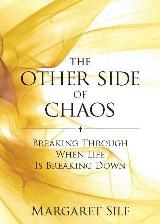
Margaret Silf compares the inherent dangers and opportunities arising from moments of strife ...
I guess every generation tends to think of itself as living through the most disrupted, most challenging times ever. When my own parents were marrying and setting up home and thinking about a family, the world was plunged into the mire of global conflict on a scale hitherto unimaginable. Yet I, along with millions of others, was still conceived and brought to birth. The thrust of life prevailed against all the forces of darkness.
But in our times that sense of living on the edge of the abyss surely has to be even more intense – because it is coming at us from many directions at once. We are increasingly aware of the effects of climate change, and glimpsing hazily, and scarily, what that might mean in the near future in terms of mass migration and conflict over diminishing oil and water supplies. We are seeing political unrest breaking out in so many places, and we are hearing warnings of the consequences of political and social instability for entire regions of our earth. We have come through a major meltdown of our economic systems, and lost trust in the banks we once held to be the pillars of stable society and guardians of financial security. We have also, very significantly, lost trust in almost all the institutions we once held to be rock solid. Among these are some of the institutions of organised religion.
Chinese wisdom opens a different perspective on all this mayhem, however. It tells us that ‘crisis’ comprises both ‘danger’ and ‘opportunity’. If we re-visit some of our global (and personal) crises, it isn’t hard to see the ‘danger’. Our planet could become uninhabitable. Homo sapiens could become extinct. Our pensions could disappear at the click of a mouse. The time-honoured frameworks of social and personal morality could crumble into anarchy.
But what of the ‘opportunity’? Humankind evolves most noticeably when there is a problem to be overcome. There is no shortage of problems to be overcome today. Will they crush us or will they make us grow? Will we wreck our habitat or work towards genuinely sustainable living in inter-dependent partnership with all of life? Will we lose our pensions and crash our economies or will we work towards a radical re-visioning of how we do economics in ways that honour the needs of all? Will we give up on communal morality as we abandon traditional church-going, or will we think again about what it really means to be a person of faith on today’s world – especially what it means to be a Christian?
A key theme of ‘The Other Side of Chaos’ is that there is another side to chaos – there is life beyond the breakdown, and seeds of unpredictable new growth are already showing themselves as green shoots in the wake of drastic meltdown events. This pattern of regeneration out of ruin runs through everything. We see it in the story of how life evolved on this planet, in a recurring pattern of near-extinction events followed by quantum leaps forward for life itself. We see it in our sacred story, especially in the Genesis and Exodus narratives and in the pattern of life, death and transformation at the heart of the Paschal Mystery. And, not least, we see it in our personal stories, of how we have come through events that seemed destructive, but led us to new breakthrough points. This pattern is so universal that it warrants its own theory – Chaos Theory - where science and spirituality powerfully interact to give birth to that most elusive, most essential quality of life – hope!
Chaos theory tells us that every so often ordered systems break down into disequilibrium, but that at the very heart of the breakdown is the seed of a new beginning, which will take us to a higher plane than we could have reached had we not experienced the breakdown event. It isn’t hard to see how this is telling us the same deep truth as the Noah story, or the story of Calvary.
‘The Other Side of Chaos’ was written at a time when my own life in various ways was going through what turned out to be a chaotic but also transformative phase. If I could express in one sentence what that journey taught me, it would be this: ‘Death (whether of our bodies or our dreams and hopes, our securities and systems) is never extinction. It is always transformation’.
But, as the Exodus journey shows us, the only way from the place of un-freedom to the place of promise is through the wilderness. Our chaotic experiences are that wilderness ,the gaping void that stretches between the No Longer and the Not Yet, and it is precisely there that our hearts and souls are being transformed into more than we could ever imagine. Just as the caterpillar chewing its way through every leaf on the tree, including the leaf it is sitting on, will one day be transformed into an amazing new creation, the butterfly, but only after it has been through the terrifying disintegration of the chrysalis, so the human family is on the brink of going beyond its infancy in the ‘consumer stage’ to a new plane of existence that it cannot imagine. Both Physics and Faith are telling us, over and over, that if we can trust the process of the breakdown, we will not die, but be transformed.
My hope is that you might find, in ‘The Other Side of Chaos’, a travel companion along the way through some of the personal and global wildernesses we necessarily have to navigate on the way towards everything, we can, with divine grace, become.
Margaret Silf is author of The Other Side of Chaos, published later this month on November 27, as well as the focus of our featured author website promotion: http://www.dltbooks.com/special-offers/1848